
Aufgaben zu Text II
Aufgaben zu Text II (literarisch)
Outline the information on Kya and her meeting with Tate.
Analyse the role nature plays in this text. Focus on the author’s use of language.
Choose one of the following tasks:
“‘You okay?’
Her throat tightened against a sob. She nodded but couldn’t speak.
‘You lost?’
She bobbed her hand again. Wasn’t going to cry like a girl.” (ll. 49-52)
Using the quotation as a starting point, assess the role of gender stereotypes in Western societies.
or
You are on a work placement at The Northern Echo, a local newspaper in the north-east of England. You have been asked to contribute an article about human interaction to the opinion section.
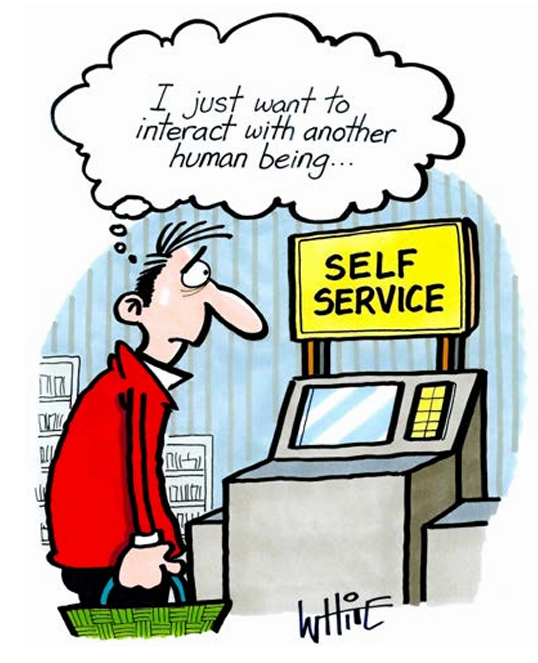
Taking the message of the cartoon as a starting point, comment on the importance of social contact.
from: https://www.cartoonstock.com/cartoon?searchID=CS570316
Text II (literarisch)
A Boat and a Boy
The following passage is set in the marshes of North Carolina in 1952.
Delia Owens, Where the crawdads sing,
copyright © 2017 by Delia Owens, Penguin Random House LLC
Weiter lernen mit SchulLV Plus!
monatlich kündbarSchulLV Plus-Vorteile im ÜberblickDu hast bereits einen Account?information on Kya:
-
seven-year-old girl; poor
-
lives with her father in a shack near a lagoon in the woods
-
sad and lonely because her mother and her older brother Jodie have left
-
takes the boat without her father’s permission and does not want him to find out
-
courageous, independent, proud: goes out in the boat alone although she has never done so before; tries to hide her distress from Tate when she is lost
her meeting with Tate:
-
Kya is surprised to see someone else out on the water: Tate, who is four or five years older than Kya, is fishing in the estuary
-
Kya does not want to go near him, but has to do so; passes his boat quickly, merely acknowledges him with a nod although he seems friendly and polite
-
later when she realizes she is lost, she has to turn back to the boy as she needs help
-
Tate gauges the situation and tries to put her at ease; he knows her name because he used to go fishing with her brother
-
he leads the way back to her home, ensuring she gets there safely
-
Kya is impressed by Tate’s calm manner; their meeting lifts her sadness; she wants to see him again
-
nature as a home for Kya:
-
knows her way around: detailed description of landmarks, e. g. “the old fallen cypress” (l. 13), “the piled sticks of the beaver lodge” (l. 14) → highlighting her familiarity with her natural surroundings
-
moves slowly in order not to disturb the animals: use of words, e. g. “she churned slowly through thicket for more than a hundred yards, as easy turtles slid from water-logs” (ll. 16-17) → showing that she is respectful of the natural world
-
views the marshes as being boundless and special: alliteration/personification, e. g. “endless estuaries branched and braided before her” (ll. 18-19) → illustrating the connection between nature (“branch”) and humans (“braid”)
-
is part of the surrounding landscape: contrast, e. g. “a tiny speck of a girl in a boat” (l. 18) in “endless estuaries” (l. 18) → underlining her own insignificance within the natural world
-
feels more at ease with nature than with humans: when she begins interacting with Tate, she does not look at him, preferring to focus on the surroundings, e. g. “looked beyond his shoulder into the reeds” (l. 46), “looking down at the water” (l. 48) → pointing out that Kya takes comfort in nature
-
-
nature becomes threatening when Kya reaches the ocean and the incoming storm is described:
-
open sea portrayed as living being: personification, e. g. “the ocean's face – gray, stern, and pulsing – frowned at her” (ll. 20-21), “Waves […] awash in their own white saliva” (l. 21), “Then they flattened into quiet tongues of foam” (ll. 22-23); “The surf taunted her, daring her to breach the waves and enter the sea” (l. 24) → showing the ocean as being alluring and potentially dangerous
-
ocean depicted in terms of war: metaphors, e. g. “with loud booms” (l. 22; noise of warfare); “energy searching for a beachhead” (l. 22; image of invading troops) → suggesting that the open sea is attacking her
-
clouds are described as looming and on the point of bursting: metaphor, e. g. “forming huge gray mushrooms pressing at the seams” (ll. 25-26) → underscoring the menacing nature of the storm
-
egrets are depicted as also sensing the danger: comparison/metaphor/contrast, e. g. “a line of white flags against the mounting gray clouds.” (l. 41) → illustrating that the storm will soon break and that the birds (white) are taking flight from the imminent threat (gray)
-
-
on her way back home, nature assumes a more confusing guise: repetition, e. g. “Round and round, near oak knees and myrtle thickets, she searched”, l. 38) → mirroring the fact that Kya cannot find her way
→ nature is of central importance to Kya
explanation of the quotation:
Kya consciously refuses to act like a stereotypical girl and appear helpless and weak to Tate; shows her pride and inner strength
role of gender stereotypes in Western societies today:
-
gender stereotypes still exist:
-
reinforced by education (different toys for boys and girls; different expectations with respect to behavior, career plans), the media / advertising (clichéd depiction of family life, of men and women) etc.
-
people not conforming to socially defined gender norms (behavior, language, clothing etc.) often meet with resistance and refusal
-
stereotypes often subconscious; people not aware of their influence on their lives and society in general
-
→ even today, gender stereotypes affect daily lives of both men and women, making them behave and think in ways that might not be their own
BUT
-
attempts to combat these stereotypes:
-
raising awareness of stereotyping and its effects, e. g. at school, in media; debates like #MeToo exposing structural sexism
-
affirmative action, e. g. women's quotas, Girls’/Boys’ Day
-
conscious use of language: “chairperson”, “their” etc. instead of generic masculine
-
establishing more open concept of gender: “diverse” as well as “male” and “female”
-
→ important not just for individuals, but for society as a whole, as people would be able to fulfill potential without adhering to social gender norms
message of cartoon: due to technological progress, self-service checkouts now in many places (e. g. supermarkets), convenient and cost-efficient, but lack of communication with other people
-
why lack of social contact nowadays
-
technological progress leads to people working remotely, shopping online, making online bookings, buying train tickets at vending machines, using self service checkouts etc.
-
ageing society: growing number of people live alone, physically limited/incapacitated
-
different family structures compared to past, e.g. fewer multigenerational families
-
changed attitudes: individualism, people less willing or too busy to engage in communal activities
-
→ less human interaction, increased loneliness among certain groups (e. g. the elderly)
-
importance of social contact
-
key for healthy development of children/young people
-
essential for people’s mental health and healthy ageing
-
chance to learn from others, be inspired by them, help each other, solve problems
-
→ social contact vital; machines replacing people not problematic if enough human interaction in general; to certain extent social contact can be facilitated by modern technology (e. g. video calls to relatives / friends living far away)